The average whole house generator installation costs between $12,000 and $15,000 for a turnkey system, while smaller essential-circuit models may start around $5,500. These costs typically include the standby unit, professional labor, and necessary permits based on the home size and electrical requirements. Most homeowners investing in a 22kW system for full coverage can expect total expenses to range from $11,000 to $15,500.
Living in Central Utah means facing unpredictable weather, where a sudden winter storm or summer wind can leave your home in the dark for hours. For many Fillmore residents, a power outage is more than just an inconvenience; it is a threat to household comfort, food safety, and critical home systems. A professionally installed whole house generator provides the reliable bridge you need to maintain normalcy when the grid fails. In this guide, we will examine the specific costs and requirements for standby power in our region. You will learn how to size a unit for your estate, the differences between portable and standby systems, and the permitting process required in Millard County. Whether you are fueling with natural gas or propane, understanding these technical details ensures your investment protects your property for years to come.
Why Fillmore and Central Utah Homeowners are Investing in Standby Power
Living in Fillmore and the surrounding communities of Millard County brings unique environmental challenges that can compromise your home’s power supply. High desert winds and heavy winter snow accumulation frequently disrupt overhead utility lines. In rural pockets like Meadow, Flowell, or Kanosh, the distance from main substations often means utility crews require more time to restore service during widespread outages. Reliance on a stable grid is not always a guarantee when the mercury drops or summer storms roll through the valley.
Investing in a whole house generator installation is fundamentally different from keeping a small portable unit in the garage. A standby system is a permanent fixture that monitors your utility connection 24/7. When the power fails, the system engages automatically. This removes the need to haul heavy equipment through the snow or manage messy fuel cans in the dark. For central Utah homeowners, this level of automation is critical for maintaining climate control and preventing frozen pipes during deep winter freezes.
Gobes Electrical understands the specific nuances of the central Utah electrical grid. Providing professional electrical services in this region requires an intimate knowledge of how local infrastructure reacts to extreme weather. We focus on delivering reliable safeguards designed to keep your family safe and your property operational, ensuring that your backup power system meets the demands of our local climate.
Standby vs. Portable Generators: Which Is Right for Your Home?
Choosing between a portable unit and a permanent standby system often comes down to how much of your daily routine you are willing to sacrifice during an outage. Portable generators are a common entry point because of their lower upfront cost. They are suitable for keeping a refrigerator running or powering a few lamps. However, they require manual intervention; you must drag the unit outside, manage extension cords, and constantly refill the fuel tank. This is a difficult, often dangerous task during a midnight blizzard in Millard County.
A whole house generator installation provides a fundamentally different experience. These units are permanently wired into your home’s electrical system via an automatic transfer switch. When the grid goes down, the system detects the loss and restores power within seconds, regardless of whether you are home or asleep.
Feature | Portable Generator | Standby Generator |
|---|---|---|
Activation | Manual (pull start and cords) | Automatic (24/7 monitoring) |
Power Capacity | Limited (essential circuits only) | High (HVAC, well pumps, full house) |
Fuel Source | Gasoline or Propane (manual fill) | Natural Gas or Large Propane Tank |
Safety | Risk of CO poisoning and backfeeding | Permanent, code-compliant outdoor install |
For homeowners in Fillmore, the ability to run high-load appliances is usually the deciding factor. A portable unit rarely has the starting wattage required for a central HVAC system. In our climate, maintaining heating in the winter and cooling in the summer is vital for protecting your property from frozen pipes and managing extreme heat. If your goal is a seamless transition that supports residential electrical upgrades like modern climate control, a standby unit is the professional choice for long term reliability.
How Much Does Whole House Generator Installation Cost in Utah?
Transitioning from a portable unit to a permanent standby system involves a significant financial investment that reflects the increased capability and safety of the equipment. For a professional whole house generator installation in Utah, homeowners should expect a turnkey price range between $11,000 and $15,500 for a standard 22kW unit. This capacity is typically sufficient to power a mid-sized home with central air conditioning and standard appliances.
The total cost is generally divided into three primary categories:
Component | Estimated Cost Range |
|---|---|
Generator Unit (14kW to 22kW) | $3,800 to $6,500 |
Automatic Transfer Switch (ATS) | $600 to $1,200 |
Labor, Materials, and Permitting | $5,000 to $8,000 |
The unit cost covers the engine and alternator assembly, while the transfer switch is the specialized component that manages the transition between grid and backup power. The labor and materials portion includes the installation of a concrete mounting pad, electrical wiring, gas piping, and the necessary administrative work for Millard County permits.
Certain factors can push these estimates higher. In rural areas surrounding Fillmore, such as Meadow or Kanosh, larger estates with specialized requirements often see costs reach $18,000 or more. These complex installations usually involve longer runs for gas lines or electrical conduit, or the need for a 26kW unit to handle high-demand loads like well pumps and large outbuildings. Investing in professional electrical services ensures that these costs are transparent and that the system is optimized for your property's specific electrical footprint. When planning residential electrical upgrades of this scale, precise load calculations are necessary to prevent overpaying for capacity you do not need or, conversely, undersizing a unit that will fail under pressure. For a specific estimate tailored to your property, you can contact Gobes Electrical to evaluate your site conditions and power requirements.
Sizing Your Generator: From 2,000 Sq Ft Homes to Rural Estates
Determining the correct capacity for a whole house generator installation involves more than just looking at the square footage of your property. Sizing is primarily driven by load, which is the total amount of electricity required to power your selected appliances simultaneously. A 2,500 square foot home with high efficiency LED lighting and gas heating requires significantly less power than a home of the same size with an electric water heater and a central air conditioning unit.
For central Utah homeowners, particularly those on rural estates in areas like Kanosh or Flowell, we must also account for high demand equipment like well pumps. These motors require a significant surge of power to start, which can easily overwhelm an undersized unit. Properly accounting for these peaks ensures that your generator does not stall the moment your water system kicks on during an outage.
Generator Size | Best For | Typical Coverage |
|---|---|---|
10kW - 14kW | Essential Circuits | Refrigerator, freezer, lights, internet, and furnace blower motor. |
18kW - 22kW | Mid-Sized Homes | Full house coverage including a 3 ton to 5 ton central AC unit. |
26kW and Up | Large Properties | Multiple AC units, well pumps, electric ranges, and detached shops. |
Our team provides professional electrical services to help you calculate these specific loads accurately. If you plan for future residential electrical upgrades, such as adding a guest suite or specialized equipment, it is often more cost effective to size up now. You can contact Gobes Electrical to perform a detailed site audit and ensure your system handles your peak demand without failure.
The Installation Process: What to Expect from Start to Finish
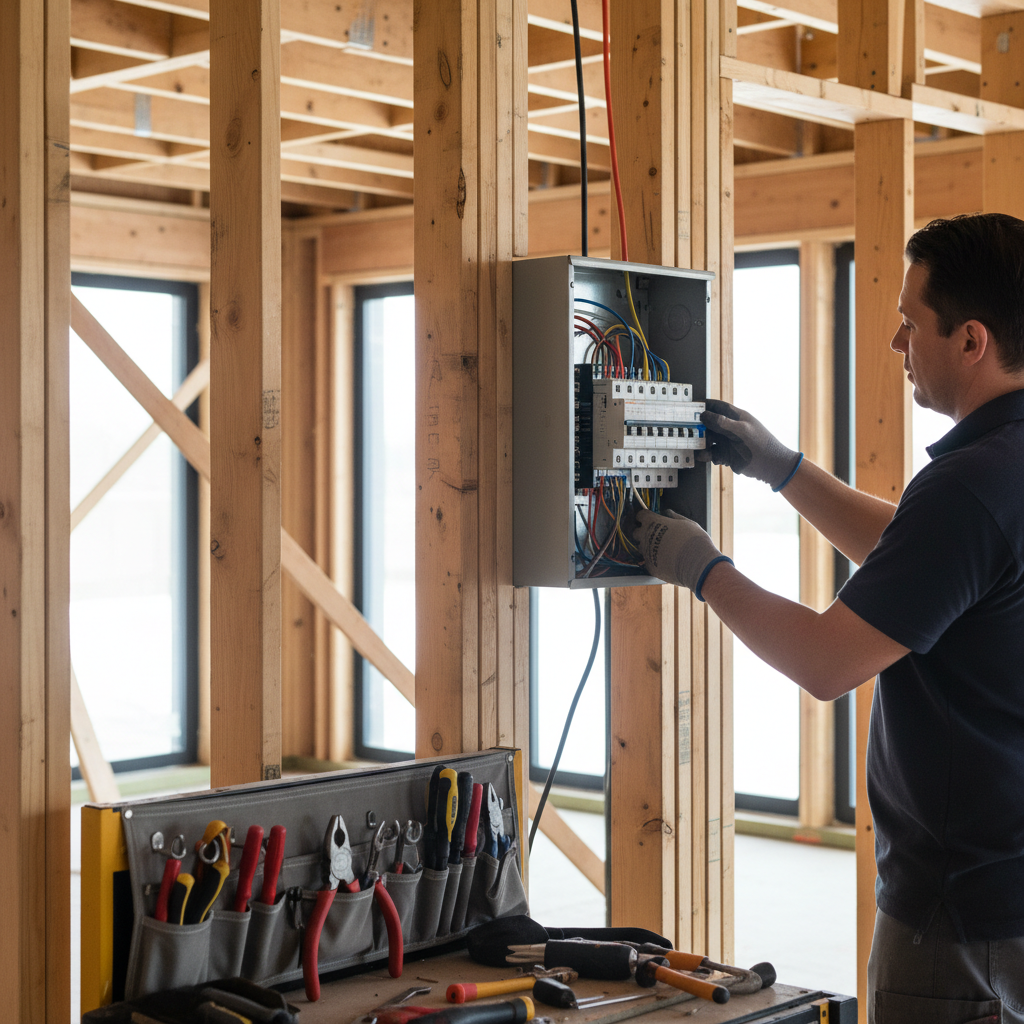
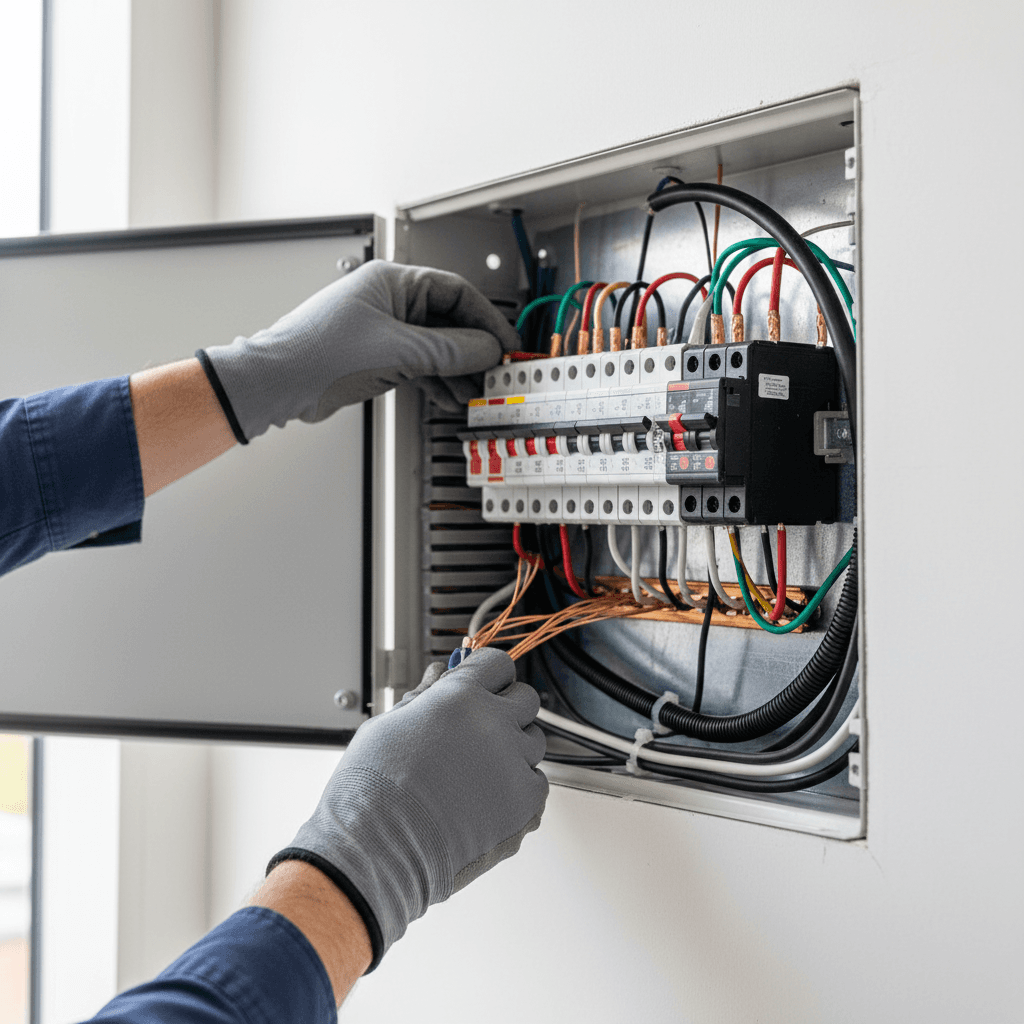
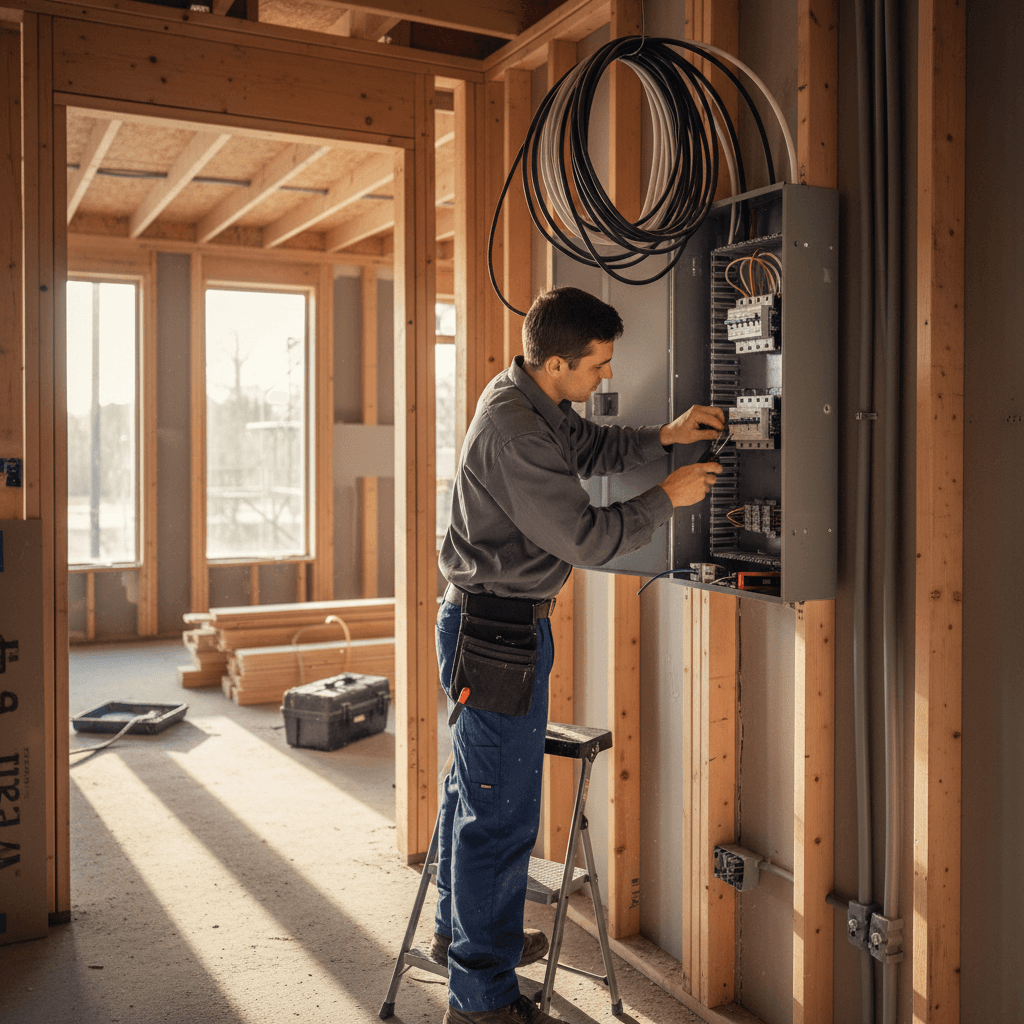
Once you have selected the appropriate unit, the physical work of a whole house generator installation begins with a detailed site assessment. We evaluate the proximity of your electrical panel to the potential fuel source, looking for a location that meets safety clearances while keeping installation paths efficient. This initial walkthrough allows us to identify the most direct routes for gas lines and electrical conduit, which helps streamline the project.
Our team starts by preparing a level, stable base. In central Utah, we often manage shifting soils and frost heaves, so we use a reinforced concrete or heavy duty pre-cast composite pad to prevent the unit from settling or vibrating over time. Following the foundation work, we manage the fuel line plumbing and the mounting of the automatic transfer switch (ATS) near your main electrical service. This switch acts as the brain of the system, constantly monitoring the utility grid.
We pride ourselves on clean workmanship, ensuring that all exterior conduit and piping are installed discreetly and secured according to current safety codes. Our technicians implement solutions designed to minimize downtime during the final integration. While a brief, planned power interruption is necessary to tie the ATS into your main panel, we coordinate this step to ensure your household routine is barely affected.
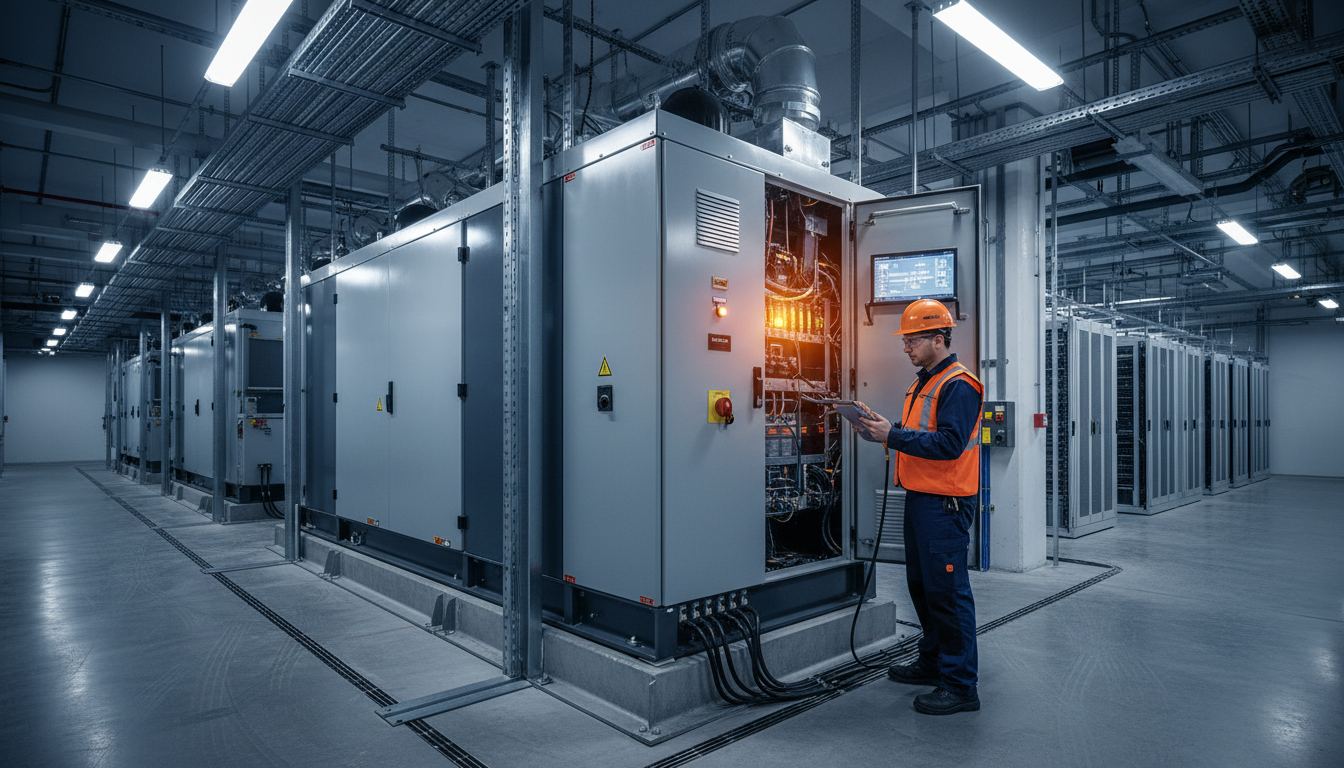
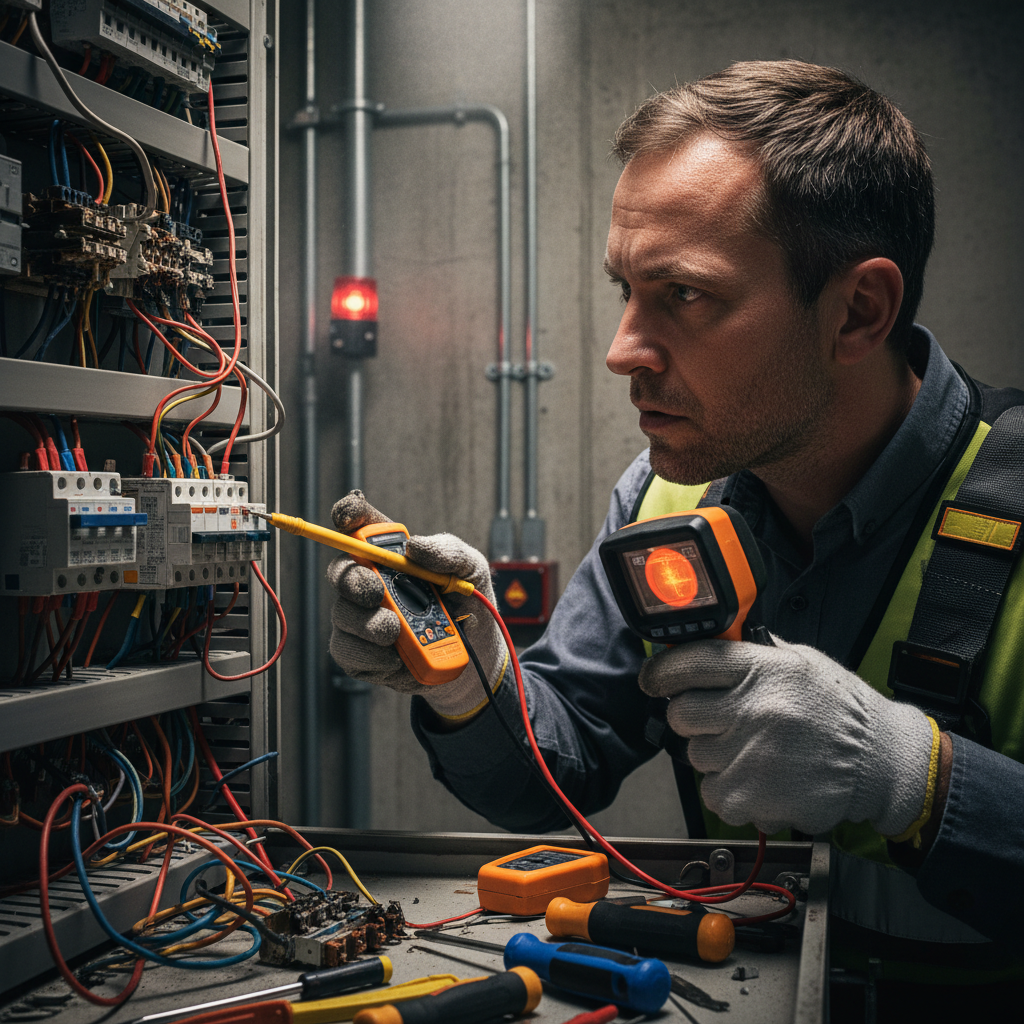
The final phase is a comprehensive system commissioning. We perform a simulated power failure by disconnecting the utility feed. This allows us to verify that the generator starts, the transfer switch engages, and the electrical load is balanced across your residential electrical upgrades. We do not leave the site until we have verified the system is ready to protect your home. For more information on how we schedule these projects, you can contact Gobes Electrical to discuss your property's layout.
Fueling Your Backup: Natural Gas vs. Propane in Millard County
Determining the fuel source is a critical step in a whole house generator installation, especially given the infrastructure variations across Millard County. In central Fillmore, many properties utilize municipal natural gas, which offers the advantage of an unlimited fuel supply without the need for manual monitoring or refills. However, for many homeowners in rural Meadow, Flowell, or Kanosh, liquid propane (LP) is the primary option due to the lack of utility gas lines.
Propane has a higher energy density than natural gas, meaning the generator engine often produces a slightly higher kilowatt output. The tradeoff is the finite supply stored on site. A standard 22kW generator can consume approximately two to three gallons of propane per hour under a medium load. If your home relies on a 250 gallon tank that also services a furnace and water heater, a prolonged winter outage could deplete your reserves faster than expected.
Fuel Type | Local Availability | Supply Reliability | Energy Content |
|---|---|---|---|
Natural Gas | Fillmore city limits | Continuous utility feed | 1,000 BTU/cu ft |
Propane | Rural Millard County | Dependent on tank size | 2,500 BTU/cu ft |
Before finalizing your residential electrical upgrades, we recommend verifying your existing tank capacity. We often advise clients to maintain at least a 500 gallon tank to ensure several days of runtime without competing with other household appliances. If you are unsure if your current setup can support the additional demand, you can contact Gobes Electrical for a consultation. Our professional electrical services include evaluating these fuel requirements to ensure your system remains operational through the duration of a utility failure.
Permits and Code Compliance for Utah Standby Generators

Moving beyond fuel and equipment, the regulatory side of a whole house generator installation ensures the system is legally compliant and safe for the community. Permanent standby units require building and electrical permits through Millard County or specific municipal offices in Fillmore. This oversight is vital for safety, particularly to prevent backfeeding. Without a professionally installed automatic transfer switch, a generator could accidentally send high voltage electricity back into the utility lines, creating a lethal hazard for utility crews working to restore power.
Adhering to the latest National Electrical Code (NEC) standards is non-negotiable for these residential electrical upgrades. Compliance covers everything from specific grounding requirements to proper clearance from windows and vents to prevent carbon monoxide entry. Gobes Electrical provides professional electrical services that include managing the entire permitting process, ensuring you do not have to navigate local building departments alone. Our commitment to code-compliant work supports the long term performance and safety of your property. You can contact Gobes Electrical to begin a project that meets every local and national safety standard.
Choosing the right whole house generator for your Fillmore home involves balancing power needs, budget, and consistent reliability. While understanding the costs and technical requirements is a great starting point, the actual installation requires precision to ensure your safety and equipment longevity. If you want expert help navigating the specific electrical demands of your property, you can learn more about our team and how we support local homeowners. We are here to help you find the perfect backup power solution for your needs.